Japanese Vintage Graphic T-shirt Design: A Timeless Aesthetic
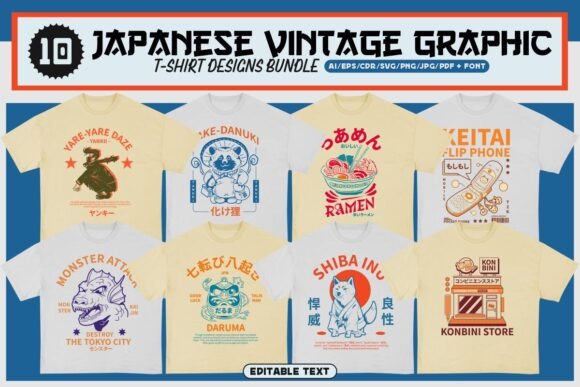
The allure of a well-worn graphic tee is undeniable. It's a piece of clothing that often carries a story, a memory, or a distinct sense of style. Japanese vintage graphic t-shirt design captures this feeling perfectly, blending intricate artwork with a nostalgic, weathered aesthetic. This particular design package offers a complete toolkit for creators, featuring the core artwork in multiple file formats like AI, CDR, EPS, JPG, SVG, PNG, and PDF, all at a crisp 300 DPI. It also includes an OFL font, making it a versatile asset for a wide range of projects. The design itself is characterized by its blend of traditional Japanese motifs—think subtle wave patterns, kanji characters, or ukiyo-e-inspired illustrations—with a vintage, slightly faded color palette. The result is a graphic that feels both culturally rich and authentically retro, appealing to those who appreciate craftsmanship and a sense of history in their apparel.
Where This Design Truly Shines
This isn't just a t-shirt graphic; it's a foundational design asset. Its strength lies in its adaptability. The high-resolution files ensure that whether you're screen printing a limited run of hoodies or creating a sublimation print for an all-over design, the details remain sharp. For a small clothing brand, this design can form the core of a seasonal collection. Imagine it on a heavyweight cotton tee, paired with simple chinos. For a print-on-demand entrepreneur, it's a ready-to-go product that requires no further design work, perfect for launching quickly on platforms like Etsy or Shopify. The included font is a practical bonus, allowing you to create cohesive marketing materials, social media posts, or even custom hang tags that match the aesthetic of the main graphic.
Practical Applications Beyond Apparel
Think beyond the t-shirt. The high-quality vector files (AI, EPS, SVG) make this design ideal for scaling to other merchandise without losing integrity. A poster for a local café or a vinyl sticker for laptops can be produced effortlessly. The vintage Japanese style also lends itself well to packaging design for niche products like artisanal teas, specialty coffee, or grooming products, where an authentic, handcrafted feel is paramount. For content creators and bloggers in the lifestyle or travel space, the graphic can be used as a powerful visual element in digital guides, thumbnails, or as a background texture, adding depth and a specific mood to their content. The versatility here is key; it’s a single asset that can unify a brand’s visual language across multiple touchpoints.
Making It Your Own: Practical Considerations
When incorporating a design like this, context is everything. The vintage aesthetic works best when it feels intentional. On a t-shirt, consider the garment color. While the design is noted to work on any color, pairing it with earth tones—olive, charcoal, off-white, or faded navy—will enhance its nostalgic vibe. For digital applications, ensure the background it sits on doesn't clash. A clean, minimalist web layout or a textured paper background can let the design stand out without competing. The included font should be used sparingly and purposefully. It’s a display font, perfect for headlines or a single impactful word, but not for body copy. Pair it with a clean, modern sans-serif font for any accompanying text to maintain readability and create a clear visual hierarchy. This balance prevents the design from feeling cluttered and ensures the message, whether it’s a brand name or a slogan, is communicated effectively. The commercial license that comes with such assets typically allows for unlimited reproduction, which is crucial for scaling a business. Always double-check the specific license terms, but this kind of package is generally built for commercial use, giving you the freedom to produce and sell without per-unit fees.
Final Thoughts on Leveraging Vintage Charm
Ultimately, the power of a Japanese vintage graphic t-shirt design lies in its ability to connect. It connects the wearer to a sense of artistry and history, and it connects the creator to a proven, marketable aesthetic. For a designer, it’s a time-saving asset that doesn’t sacrifice quality. For a small business owner, it’s a product with built-in appeal. The key to success with such a design is to use it thoughtfully—respect its style, pair it intelligently, and apply it where its strengths are most visible. It’s a tool that, when used with a bit of creativity and strategic thinking, can help build a recognizable and resonant brand identity.